
Resistance
The opposition a material or component presents to the flow of electric current, expressed in ohms (Ω) and equal to the ratio of voltage across the element to the current through it.
Definition
Resistance (R) is the fundamental electrical property that quantifies how strongly a conductor opposes the flow of electric current. It depends on the material's resistivity (ρ), the length of the conductor (L) and its cross-sectional area (A): R = ρ × L / A. Metals like copper and silver have very low resistivity, while alloys such as nickel-chromium and constantan are engineered to deliver stable, predictable resistance for use in precision resistors.
In circuit design, resistance converts electrical energy into heat — this is both useful (in heaters, braking systems and current-limiting circuits) and unavoidable (parasitic losses in cabling and contacts). Resistance also sets voltage-divider ratios, defines RC time constants and biases active devices like BJTs and op-amps.
Real resistors are never purely resistive: they carry parasitic inductance (especially wirewound types) and parasitic capacitance, which become significant at high frequencies. Specifying a resistor means choosing not just the nominal value but also tolerance, TCR, power rating, voltage rating and frequency response so the component behaves as a true resistance across the operating envelope.
Related terms
Ohm's Law
Ohm's law states that the current through a conductor between two points is directly proportional to the voltage across the two points, with resistance as the constant of proportionality: V = I × R.
Tolerance
The maximum allowable deviation of a resistor's actual resistance from its nominal value at room temperature and zero applied power, expressed as a percentage (e.g. ±1%, ±5%).
TCR (Temperature Coefficient of Resistance)
TCR is the relative change in resistance per degree Celsius of temperature change, expressed in parts per million per kelvin (ppm/K or ppm/°C); it determines how stable a resistor is over its operating temperature range.
Voltage Coefficient
Voltage coefficient is the change in resistance value per applied volt across the element, expressed in ppm/V; it captures the non-linear behaviour of resistive elements under high electric fields.
Related products

Wirewound Resistors
High-precision, low-noise wirewound resistors for measurement and current sampling
View product family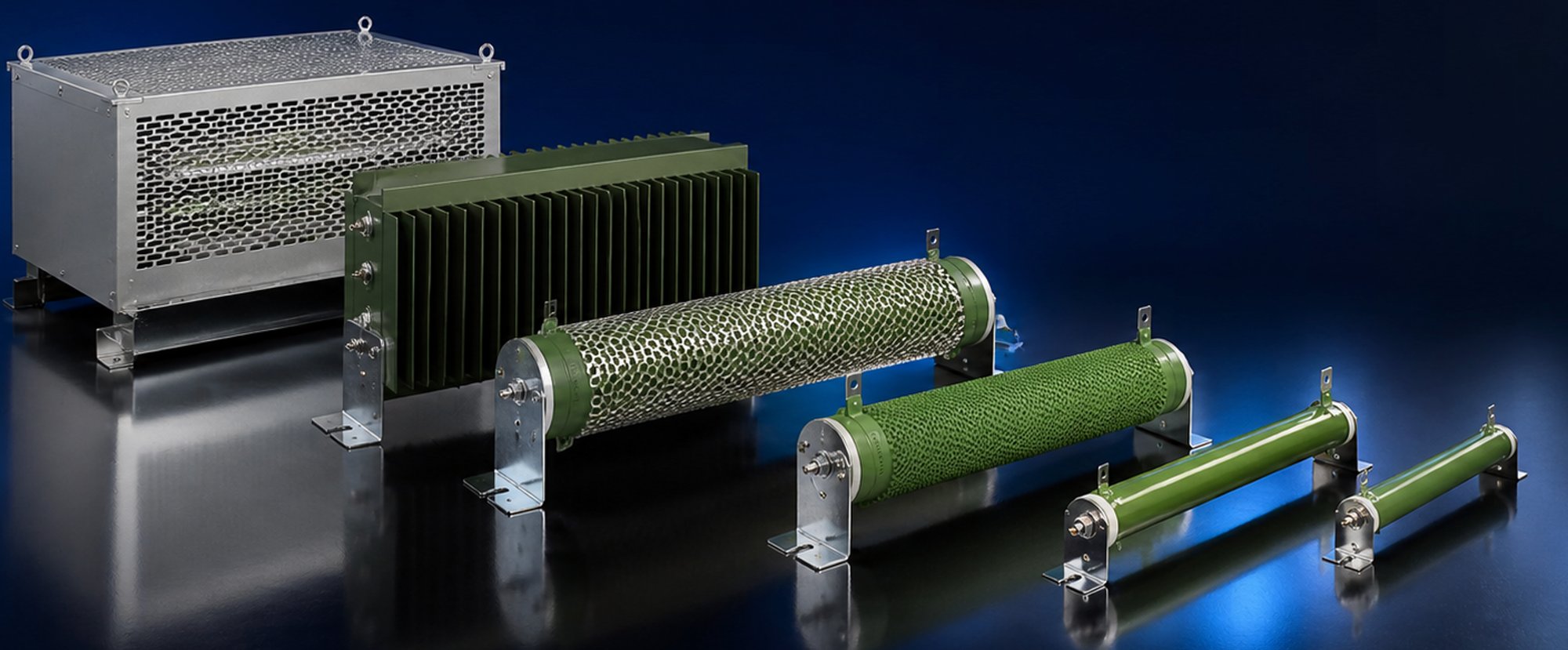
High-Power Resistors
Industrial-grade braking and discharge solutions covering 50W ~ 100kW
View product family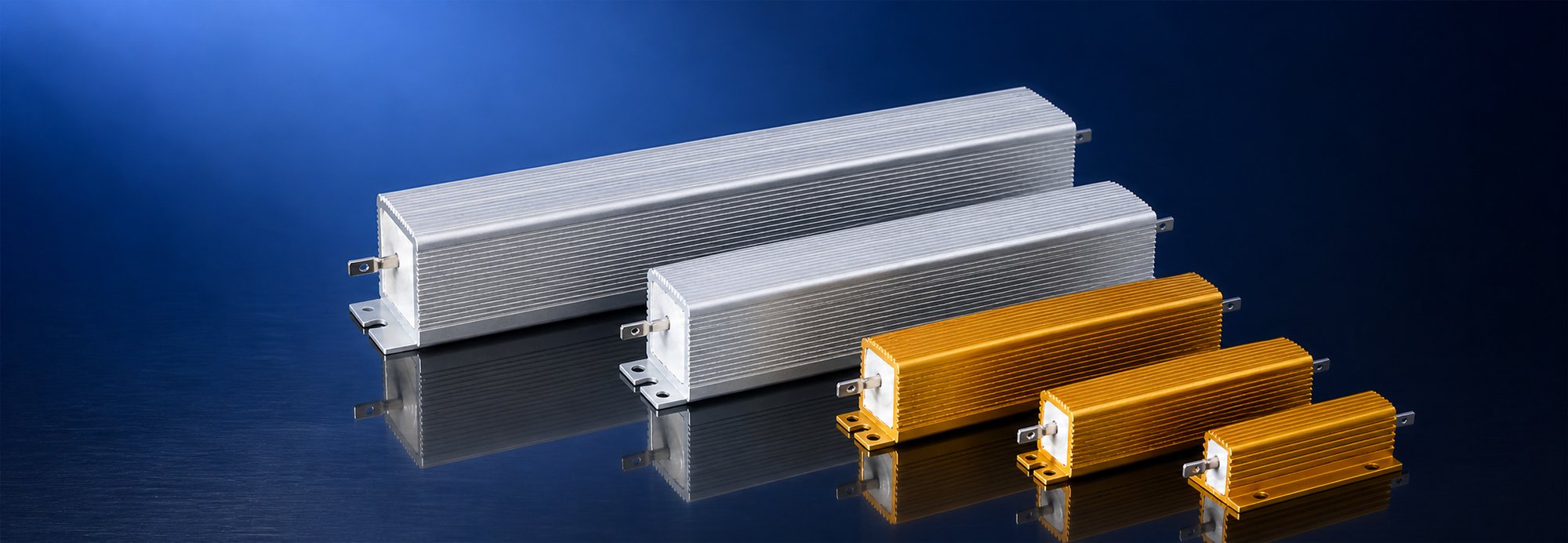
Aluminum Housed Resistors
Aluminum-housed resistors with superior heat dissipation — ideal for inverters, servo drives and other high-power applications
View product familySample Request
Standard samples are provided free of charge in reasonable quantities (shipped within 2–3 business days). Custom samples are delivered within 2–4 weeks. Please use the form on the right to tell us:
- Company and contact details
- Target part number or key specs (power / resistance / package)
- Application scenario and estimated annual volume
- Shipping address and expected delivery date