
Pre-charge Resistor
A current-limiting resistor placed between a DC source and a large DC-link capacitor bank during startup, charging the capacitors slowly through the resistor before the main contactor closes and bypasses it.
Definition
Connecting a discharged capacitor directly to a DC source produces an unbounded inrush current limited only by parasitic resistance and contactor wear — easily 10 kA peaks in EV traction systems. The contactor contacts arc and weld, the bus traces vaporise, and the capacitors can fail. The pre-charge resistor inserts a controlled R in series with the bus so the inrush is bounded by V_bus / R and the capacitors charge along an RC time constant.
The sequence: (1) auxiliary contactor closes, current flows V/R through the resistor into the capacitors; (2) capacitor voltage rises toward V_bus over 5τ ≈ 5 × RC; (3) controller monitors bus voltage and, when within 5 % of source, closes the main contactor in parallel — bypassing the resistor; (4) auxiliary contactor opens, pre-charge circuit goes idle until next startup.
Sizing: choose R so the peak current V/R does not exceed contactor or source rating; choose energy capacity ½CV² (which all flows into the resistor regardless of R value) and power rating compatible with worst-case re-cycling. For a 400 V / 5 mF EV battery system, a 50 Ω / 200 W aluminum-housed resistor sees 8 A peak, charges to 99 % in 1.25 s and absorbs 400 J per cycle. Pre-charge failure is a leading cause of contactor weld in EVs and BESS — the resistor is a critical safety component, not an afterthought.
Related terms
Bleeder Resistor
A permanently connected resistor that drains residual energy from capacitors after power-off, ensuring the DC bus reaches a safe touch voltage (typically < 60 V) within a defined time per IEC 60204 / IEC 61851-23.
Balance Resistor
A resistor connected in parallel with each capacitor in a series-connected capacitor bank to equalise the voltage across each unit and compensate for capacitance and leakage tolerances.
Aluminum-Housed Resistor
A power resistor in which a wirewound element is potted with silicone gel inside an extruded aluminum housing, designed to be bolted to a heatsink for high-density continuous power dissipation from 5 W to 1500 W.
Pulse Power
The instantaneous power a resistor can absorb during a short pulse of defined duration and duty cycle, often much greater than its continuous rating because the heat is buffered by the element's thermal mass.
Related products
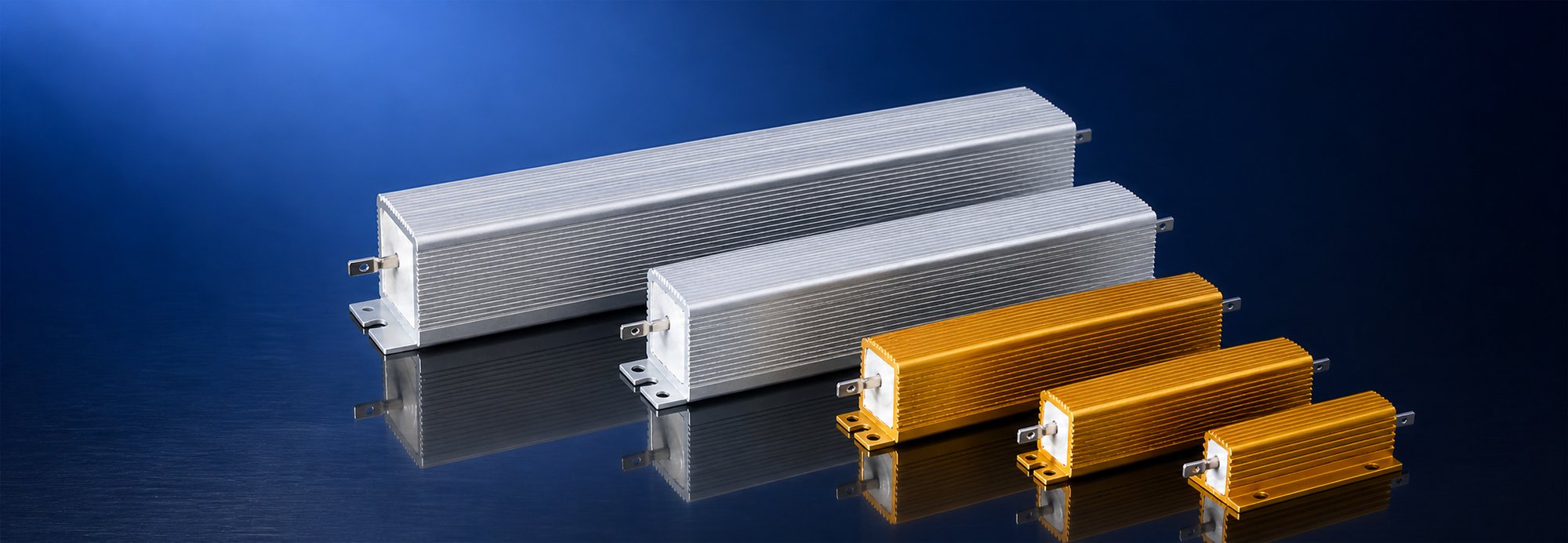
Aluminum Housed Resistors
Aluminum-housed resistors with superior heat dissipation — ideal for inverters, servo drives and other high-power applications
View product family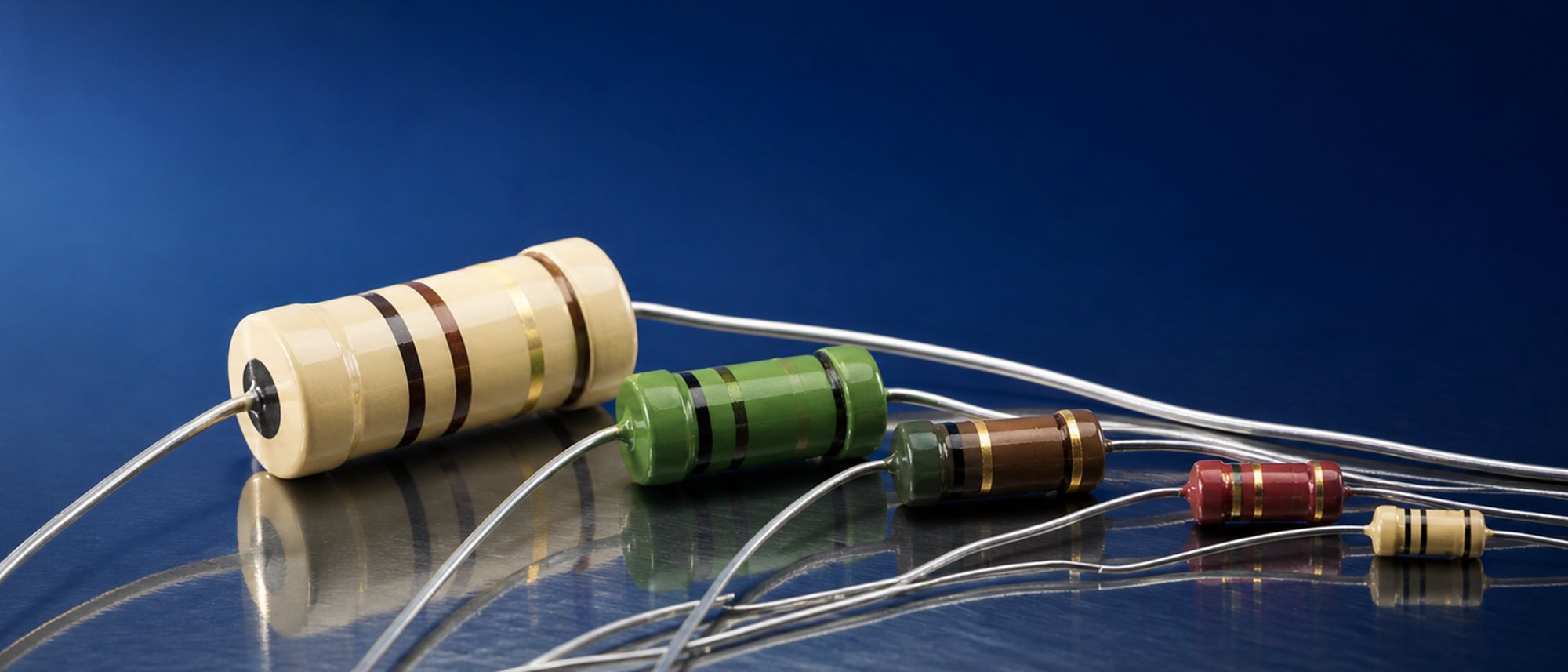
Wirewound Resistors
High-precision, low-noise wirewound resistors for measurement and current sampling
View product family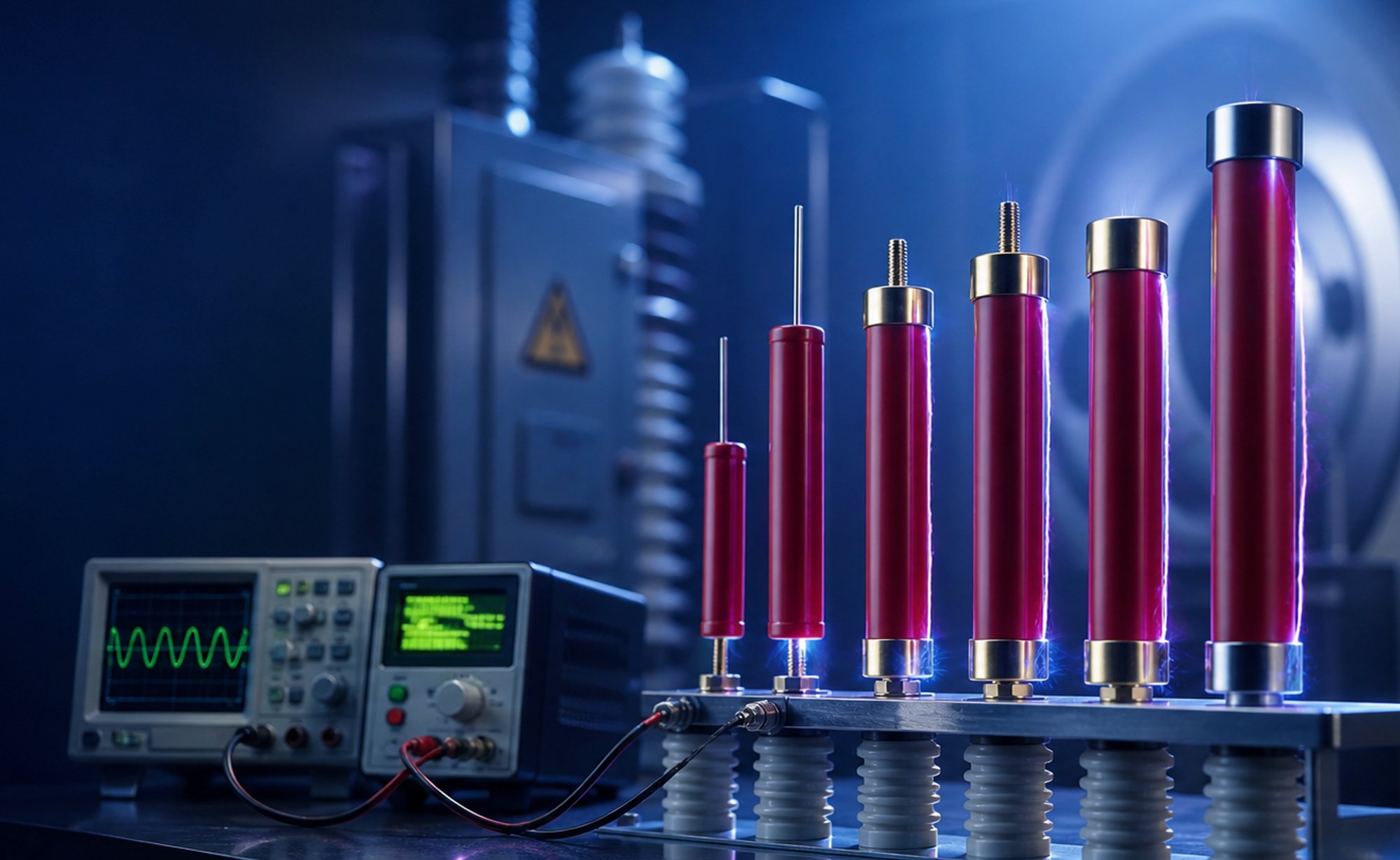
High-Voltage Resistors
Professional resistors for high-voltage pulse, discharge, X-ray and HV measurement
View product family
Sample Request
Standard samples are provided free of charge in reasonable quantities (shipped within 2–3 business days). Custom samples are delivered within 2–4 weeks. Please use the form on the right to tell us:
- Company and contact details
- Target part number or key specs (power / resistance / package)
- Application scenario and estimated annual volume
- Shipping address and expected delivery date